
Staying safe at the beach
It is important to understand how to identify the dangers and risks at the beach and learn how to keep yourself safe for an enjoyable day.
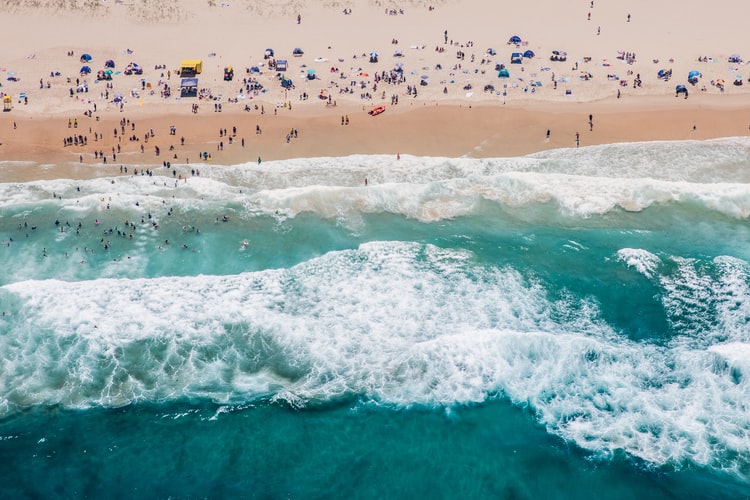
What are the dangers at the beach?

BREAKING WAVES
When the swell reaches shallow water, it pushes itself upward until it cannot support itself anymore. This is when it will break. There are three types of breaking waves each very different. On any beach, there will commonly be a combination of these three types of waves, plunging or dumping waves, spilling, or rolling waves, and surging waves. Strong dumping waves and surging waves can be dangerous as they can be big and sudden.

HEAT AND SUN
The Australian summer is synonymous with long, hot and sunny days. This means there is increased exposure to heat and potentially dangerous UV rays. To enjoy the beach it is important that you follow a number of simple steps when it comes to sun safety - always make sure you put sunscreen on at least 20minutes before heading outside and reapply every few hours.
BLUEBOTTLES
The bluebottle (Physalia) is probably the most well-known jellyfish around the Australian coastline. Their blue, balloon-like sail sits above the water and is attached to a long tentacle extending below it. This tentacle is covered in stinging cells called nematocysts. When this touches the skin it reacts by injecting a small amount of a toxin which causes irritation and can be quite painful.
BLUE-RINGED OCTOPUS
Whilst the blue-ringed octopus may look small and beautiful, it can be deadly. They are extremely well camouflaged against the rocks and only display their blue rings when threatened. The blue-ringed octopus is commonly found hiding in the shallow rock pools of inter-tidal zones all around Australia.

SHARKS
There are many types of sharks around Australia. Most are harmless to humans. Although humans fear sharks, they are an important part of the ecosystem. Shark attacks are very rare and if you follow our safety tips, the risk is even less. The safest part of the beach is the area between the red and yellow flags where trained lifesavers & lifeguards keep a sharp lookout for sharks. If they spot a shark, lifesavers & lifeguards will sound a siren or ring a bell, put up the red and white flag and tell you to leave the water immediately.
Lifesavers top tips for staying safe at the beach!
Always Swim Between the Red and Yellow Flags
Lifesavers set up these flags to mark and watch the safest swimming area, so they will notice you if you need help.
Check the Beach Safety Signs
Lifesavers use signs to let you know about possible dangers at the beach. You must always check these signs before entering the ocean.
Say Hello to the Lifesavers
When you arrive at the beach, greet the lifesavers. They are there to help all visitors. They enjoy meeting new people and are happy to answer any questions you have.
Never Swim Alone
Always swim with a friend or an adult, and never enter the ocean by yourself.
If You Get Into Trouble in the Water, Stay Calm and Raise Your Hand
It is frightening to be caught in the ocean where your feet cannot touch the bottom, but remember to stay calm, raise your hand, and call for help. Try to float on the water. If you feel you are being pulled away from the shore, avoid swimming against the current. This will only tire you out and you will be unable to float.
In an Emergency, Call 000
If you cannot swim, do not try to rescue other people who are in trouble. Always call for help. If lifesavers are not present, call 000. You may be able to rescue a person by throwing them something to hold onto, such as a board or a cooler box. Many beaches have red public floatation devices installed for this purpose.